Executive summary
Price competition in hotel search has largely saturated, especially for leisure travel. As a result, platforms increasingly differentiate by helping users make better decisions.
One of the largest hidden costs of travel is time spent commuting between accommodations and the places travelers want to visit. Yet most hotel search interfaces still rely on distance-based location filters that ignore public transit topology and fail to reflect real travel effort.
This article explores an alternative approach: ranking accommodations by total public transit time to user-selected points of interest. Using Berlin as a proof of concept, I show that transit-time-based ranking reveals meaningful structure that distance-based filters consistently miss. Well-connected areas extend far beyond the city center, while poorly connected locations can triple total travel time over the course of a trip.
The findings suggest that optimizing for transit time can improve user decision-making, increase conversion rates, reduce pressure on a small set of central hotels, and surface better-distributed inventory — all with minimal operational cost and deterministic analytics.
The problem isn’t price
Most travel today is leisure travel. And leisure travelers don’t optimize for the cheapest possible stay, but for the overall experience.
Price still matters, of course. But once price competition is saturated, reducing it further yields diminishing returns. At that point, the real differentiation comes from helping users make better decisions, not just cheaper ones.
One of the biggest hidden costs of a trip is time.
Time spent commuting.
Time spent navigating unfamiliar transit systems.
Time spent realizing that a hotel was “well located” only on a map.
Optimization problem
When searching for a hotel, users are already solving a complex optimization problem.
They juggle price, amenities, aesthetics, availability, and location. On top of that, they carry a mental list of places they want to visit: attractions, museums, neighborhoods, restaurants.
Now add three constraints:
unfamiliar city,
multiple points of interest,
spatial reasoning under uncertainty.
This quickly exceeds human cognitive limits. Most people cannot reliably reason about more than a handful of entities at once — and certainly not while doing spatial calculations in their head.
As a result, users fall back to heuristics. The most common one is proximity.
Beyond the proximity paradigm
“Close to the center” is the default shortcut, but proximity is a poor proxy for convenience:
Distance \(\ne\) travel time
City center \(\ne\) optimal access
Straight-line proximity ignores transit topology
Two hotels equally distant from an attraction can have completely different travel times depending on transfers, line frequency, or network connectivity.
If travelers care about how much time they spend moving through a city (and they do) then optimizing for coordinates is the wrong abstraction.
We should optimize for time, not for distance.
Different concept: total transit time
Instead of asking how far from the city center a hotel is, we can ask a more relevant question:
How much time will a traveler spend getting to the places they want to visit?
The idea is simple:
Let users select multiple points of interest.
Calculate public transit time between hotels and those POIs.
Rank accommodations by aggregate transit time.
There is no heavy machine learning in background involved. Just a deterministic algorithm precomputing transit times, and a simple aggregation function to rank hotels based on user-selected POIs.
Proof of concept
To test whether this idea is practical and meaningful, I built a proof of concept using Berlin as an example. The goal was to understand whether transit-time–based ranking reveals meaningful structure and whether it contradicts common assumptions.
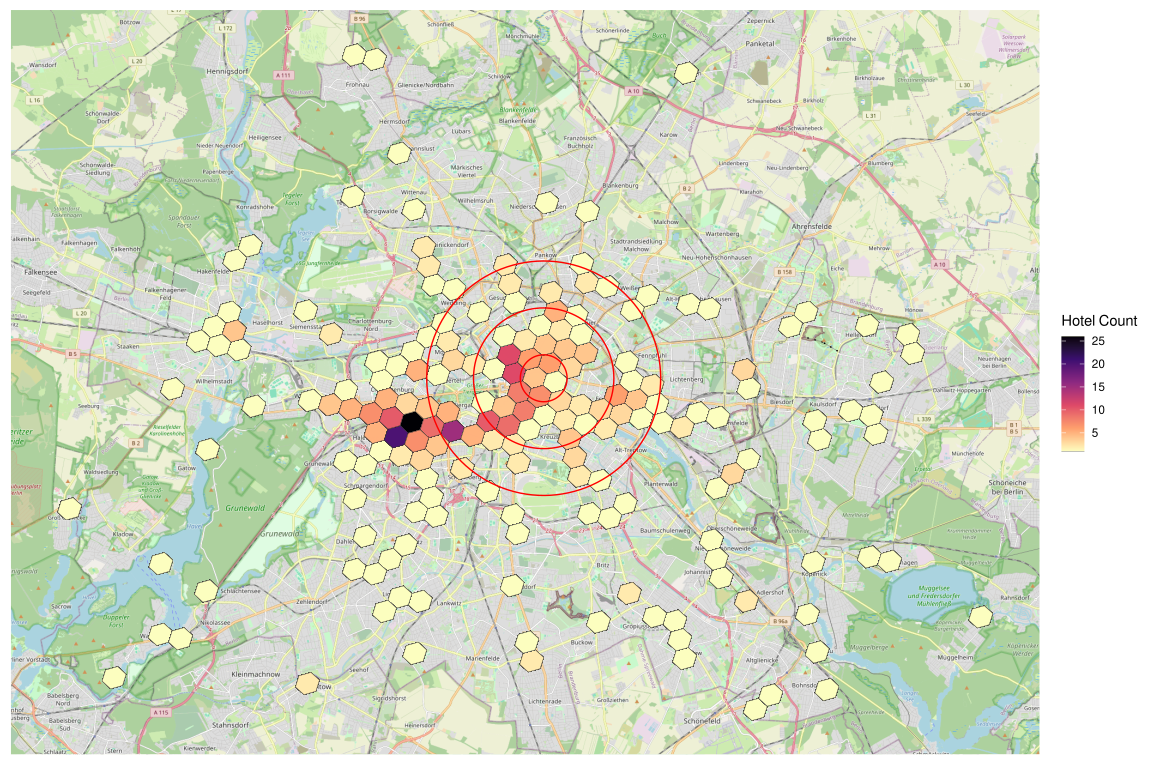
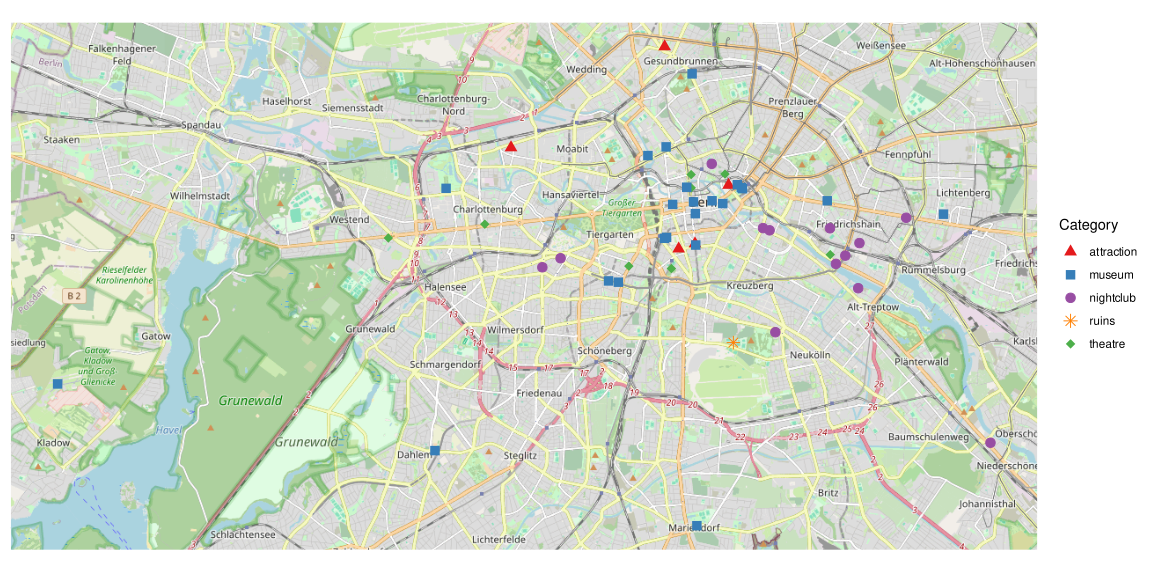
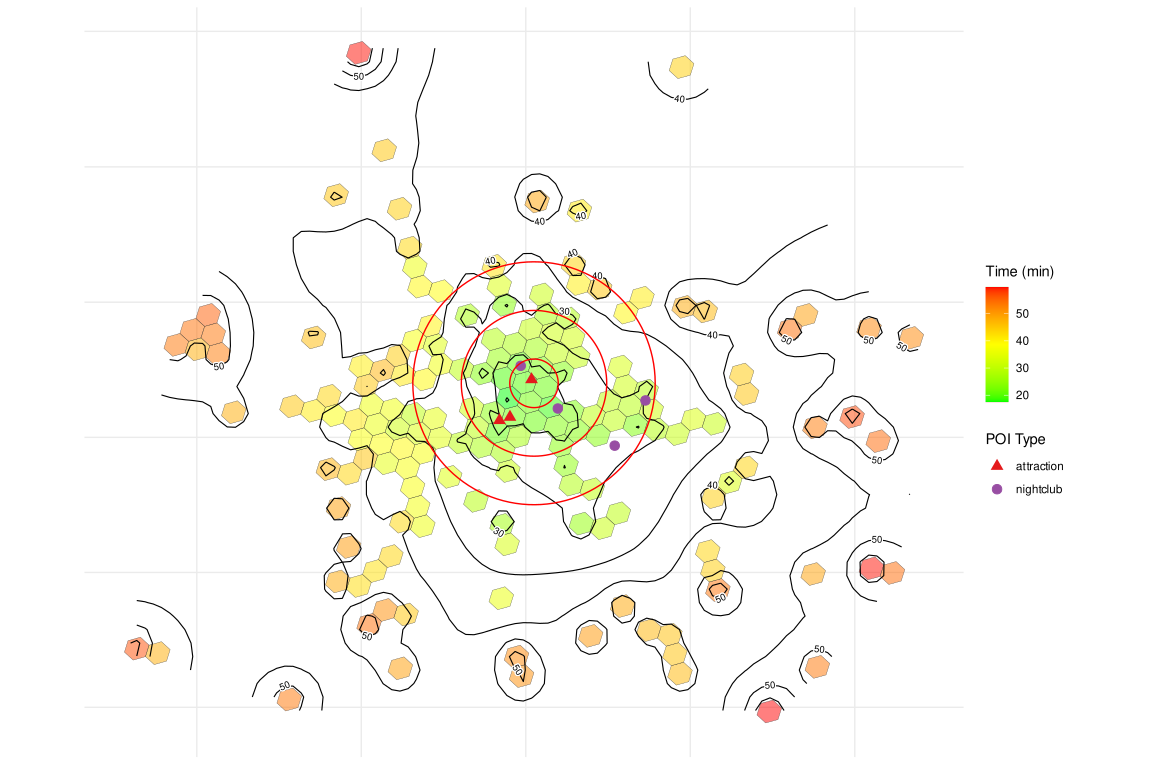
I’ve gathered data on 455 hotels (Figure 1) and top 50 most popular points of interest in Berlin (Figure 2) and calculated 9,444 transit times between hotels and those attractions.
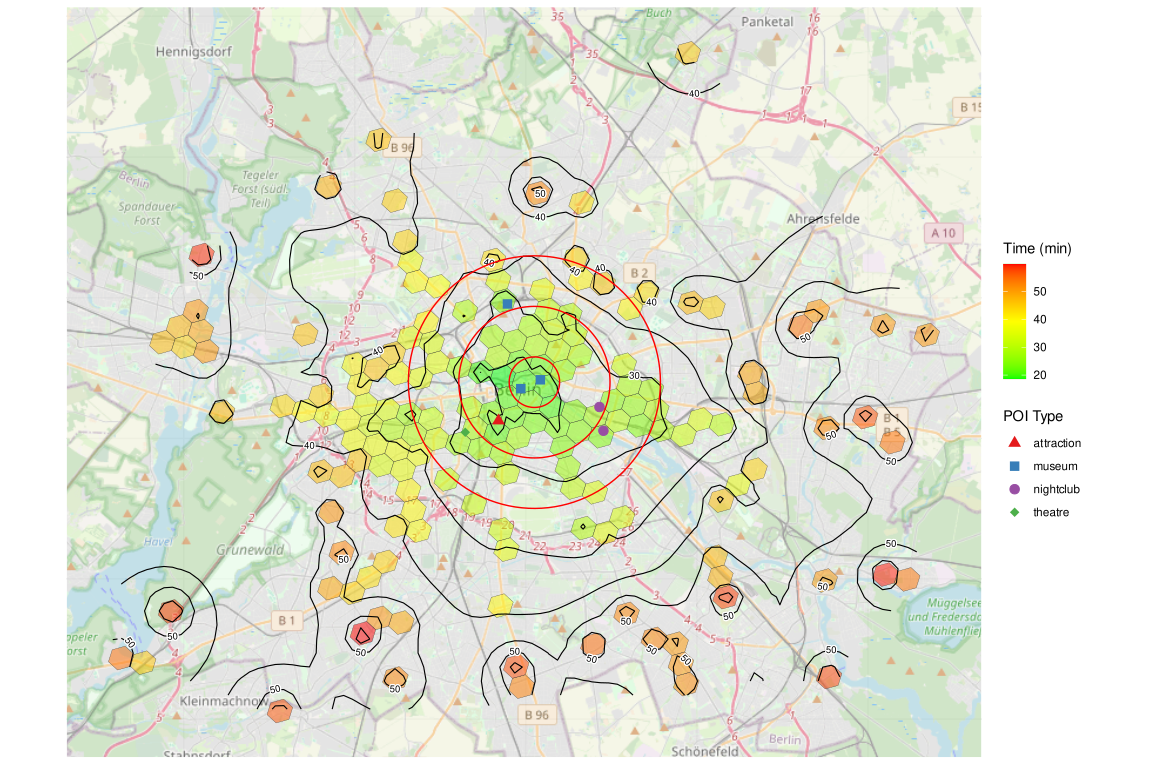
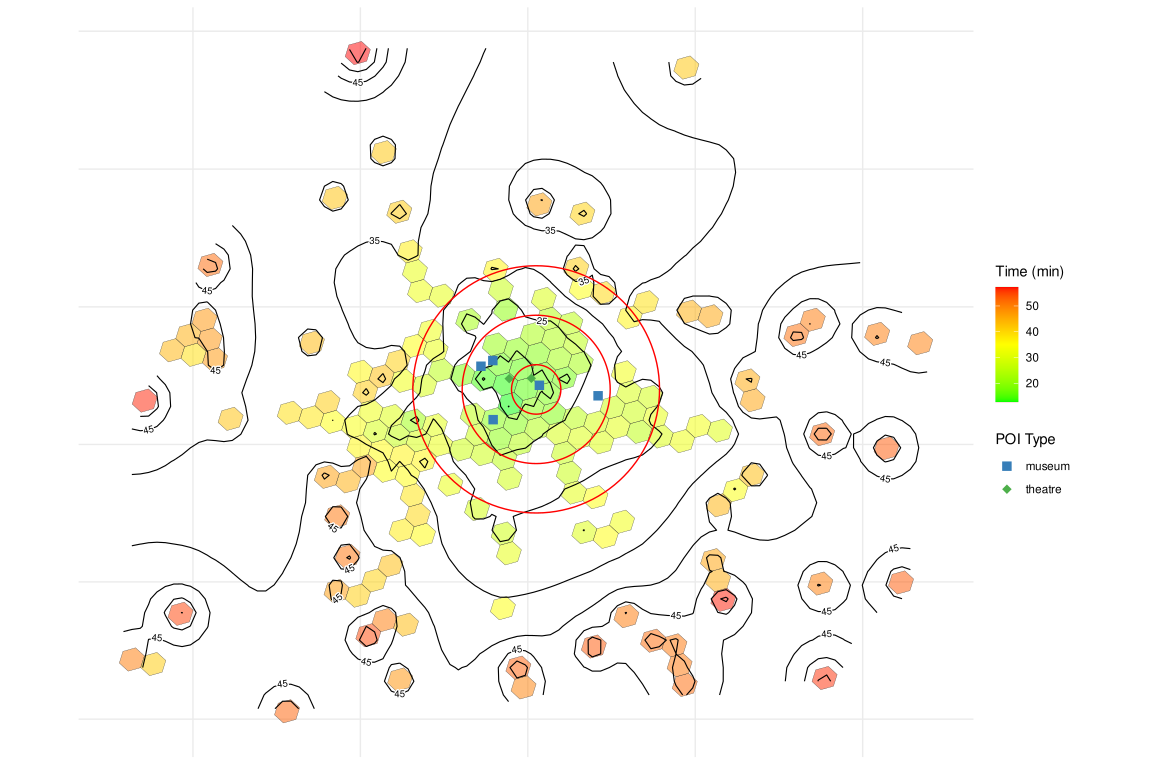
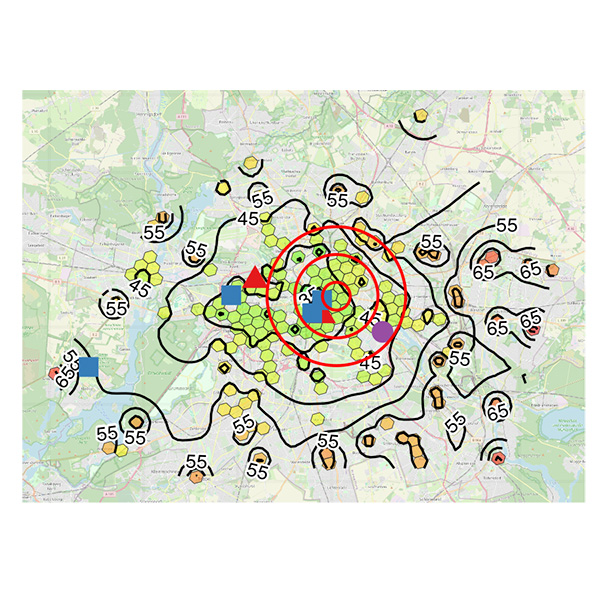
Then I simulated travelers visiting attractions based on different interest profiles. Assuming trip duration is 7 days, and traveler starts with a new location each day, I picked 7 random locations and calculated average transit time from each hotel to chosen locations (Figure 3, Figure 4, Figure 5).
Key findings
Looking at the results, several key insights emerge:
First, the area with minimal to moderate transit times is much wider than expected. Efficient access is not confined to the city center.
Second, distance from the center is not a good predictor for the transit time. Areas with equal transit times are far from circular shape.
Third, booking a hotel in a poorly connected location can easily triple total transit time over the course of a trip.
Finally, neighboring areas can differ dramatically. Two hotels just a few streets apart may lead to completely different experiences of the same city.
These effects are invisible when using distance-based filters, but immediately obvious when optimizing for time.
Product implications
From a product perspective, the implications are straightforward. This approach improves both user experience and marketplace balance.
NoteHigher conversion rates
Better decision support leads to higher conversion rates. When users understand the trade-offs, they commit with more confidence.
NoteMore value for travelers
Reducing transit time creates real value for travelers, not a perceived value, but actual hours saved during a trip. This can lead to higher satisfaction and repeat bookings.
NoteBetter marketplace balance
At the platform level, this approach reduces pressure on a small set of “top” hotels and improves visibility for well-connected, non-central accommodations that are currently underrepresented.
Operational costs
From an engineering and analytics standpoint, this approach is lightweight.
Transit times are precomputed.
Routing APIs are inexpensive.
Results are deterministic and predictable.
There is no real-time inference, no complex infrastructure, and no hidden operational risk. Running costs are close to zero and, more importantly, easy to forecast.
Risks and second-order effects
Any ranking change shifts market dynamics.
Central hotels may face stronger competition as their implicit advantage erodes.
Poorly connected hotels may lose visibility once transit time becomes explicit.
These are not unintended consequences. The filter surfaces information that already affects the user experience, whether platforms acknowledge it or not.
Next steps
Several steps would be needed to move from concept to product:
User research to validate perceived value (e.g. using Kano method).
Replicating the analysis across multiple cities.
A pilot implementation with a limited user segment.
A/B testing the impact on conversion, engagement, and satisfaction.
Conclusion
Optimizing hotel search for transit time rather than distance offers a more accurate and user-centric way to help travelers make informed decisions. It reveals hidden structure in the city that distance-based filters miss, and it has the potential to improve user experience and marketplace balance with minimal operational cost. As travel platforms seek new ways to differentiate, this approach provides a compelling opportunity to enhance decision support and create real value for users.
See Also
Here are some of my other posts related to product analytics, geospatial analysis, and data visualization:




No matching items